
This integration requires that you have a TikTok developer account. It also requires that you have a public website, with https, and can upload files to that site to verify ownership.TikTok will also not allow http:// for your app redirect URI, so you will need to be accessing Postiz from HTTPS.
1
Create your app
Go here: https://developers.tiktok.com/apps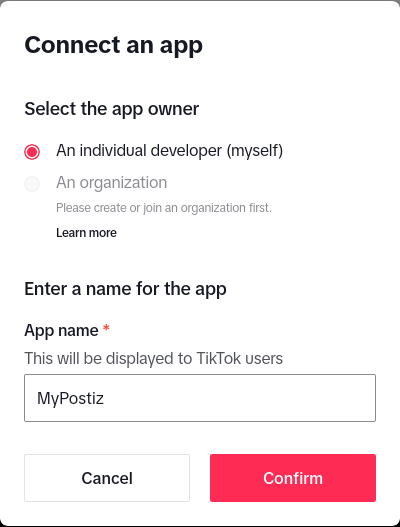
- App Name:
MyPostiz - Redirect URI: (see below)
- Production:
https://your-postiz-domain.com/integrations/social/tiktok - Local development (HTTPS required):
https://localhost:4200/integrations/social/tiktok - Docker (HTTPS required):
https://localhost:5000/integrations/social/tiktok
2
Set a TOS and Privacy Policy
This needs to be on a public domain that you have access to, that is hosted on HTTPS.Tick “Web” for your platforms.
3
Add apps
Add the “Login Kit” and “Content Posting API” to your app.For “Login Kit”, set the redirect URI to http://localhost:4200/integrations/social/tiktokFor Content posting API, enable “Direct Post”.
4
Add scopes
Add the following scopes:
- user.info.basic
- video.create
- video.publish
- video.upload
- user.info.profile
5
Copy your client secret to environment variables
These can be found immediately after registering your application. The client ID is 16 characters long and the secret is 32 characters long.Restart Postiz with the updated environment variables
6
Add a TikTok channel in the Postiz web interface
Go to the Postiz web interface, and click on the “Add Channel” button. Select “TikTok” from the list of available channels. You should be redirected to TikTok to authorize the application.
Posting settings
When composing a TikTok post, the “How do you want to post?” setting decides which other settings apply:- Post directly to TikTok publishes the post and applies all the settings below.
- Upload without posting does not publish: it sends the media to the account’s TikTok app inbox, where the owner must finish and publish it manually within 24 hours or it is discarded. TikTok keeps only the post content/title in this mode, so the settings panel collapses to hide the other settings while it is selected.
- Allow Duet, Allow Stitch, and Video made with AI apply to videos only, TikTok has no equivalent for photo posts.
- Auto add music applies to photos only.
- Privacy level, comments, and the branded-content toggles apply to both videos and photos.